
How to Get Warren County Court Records
One Clerk of Superior Court office in Warren County handles every local case file. Superior Court and District Court are both there. So are magistrate, criminal, civil, estate, and special-proceeding matters. Begin with the North Carolina eCourts Portal. Its public Case Summary / Register of Actions is a quick way to identify a case and review the event history. Keep in mind the Portal is a research aid. It is not the official record. For a filed document, a judgment, or a certified copy, go through the Warren County clerk. A public terminal at the courthouse works when an online result seems thin, and a clerk visit fills the gaps.
- Write down the party name, case number, or other known case detail, then name the exact item needed, such as a Case Summary, order, judgment, or a plain or certified copy.
- Search Portal for public case information. Narrow a statewide name result to Warren County before treating it as the right court file.
- For a Warren County case-file document, call, visit, or mail the Warren County Clerk of Superior Court. No Warren-specific ordinary-copy request form was published, so call before mailing a records request.
- Ask whether the item is public, whether a search, copying, or certification charge applies, and whether the clerk needs more case details to locate an older file.
- Receive the available plain copy or request clerk certification when an official certified copy is required. A Portal display does not replace that certification.
Note: Clerk staff can locate a court record and explain how to request it, but they cannot give legal advice on what a filing means.
Warren County Clerk Record Route
The Warren County Judicial Branch location shows a single unified office. There are no separate criminal and civil records desks. That matters when a case moved between court levels. A felony, for example, may begin in District Court and continue in Superior Court. Yet the same Warren County clerk keeps the whole local file. Traffic, small claims, estates, and special proceedings sit in that office too. Describe the item you want rather than guessing at a department name.
North Carolina's public-record definition supplies the source context for this Warren County court-records image.
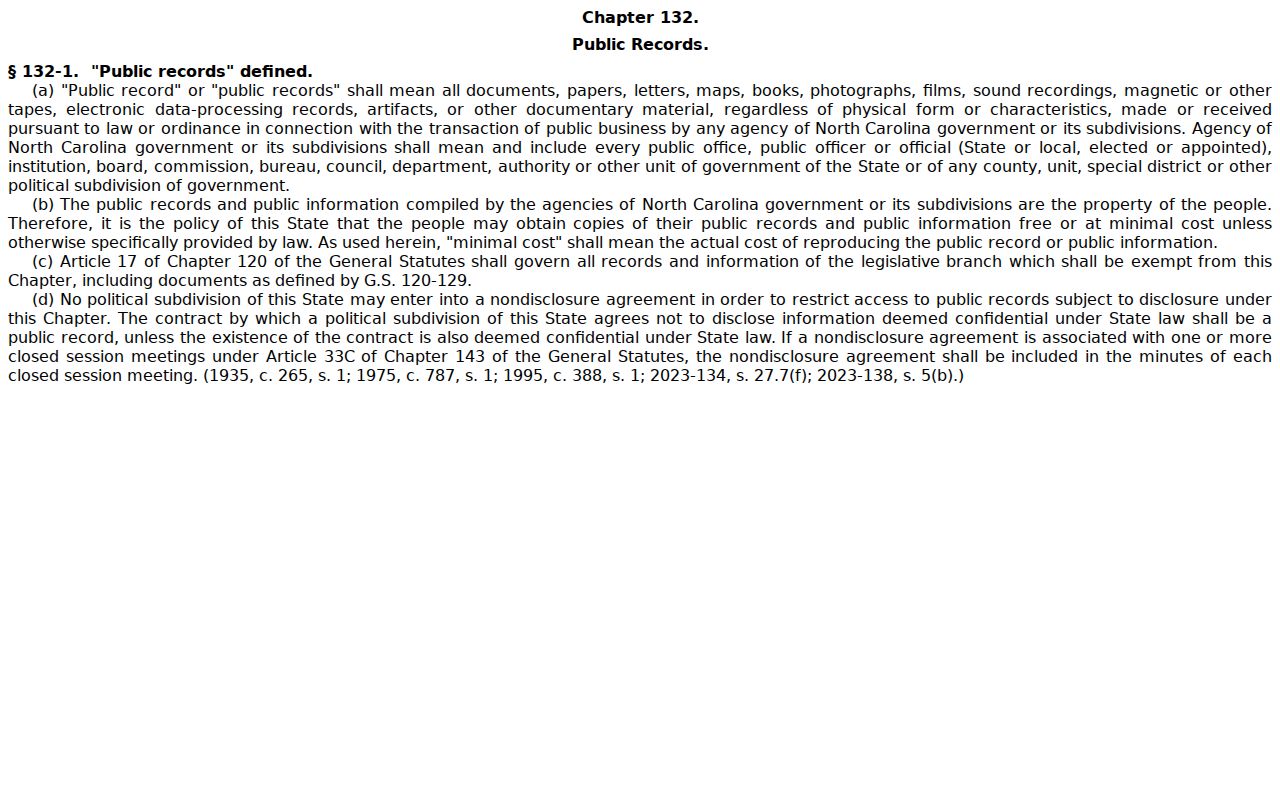
Access to Warren County court records begins with the legal status of the record and the clerk's office that keeps it, not with any commercial data seller.
Types of Court Records
A Warren County court record can mean two things. One is the running case index. The other is a single document behind one of its entries. The clerk's files cover felony, misdemeanor, infraction, and traffic cases. Civil, small-claim, estate, and special-proceeding matters are there too. What you get depends on the item. Some documents are open for inspection. Others exist only as copies, and a few are sealed by law or court order. Naming the document type up front helps the clerk decide what can be released.
- Case Summary / Register of Actions: the chronological history of public case events, hearings, and outcomes.
- Pleadings and notices: filed papers that begin or respond to a case, where public access is allowed.
- Orders and judgments: signed court actions and final or enforceable decisions in the file.
- Estate and special-proceeding records: clerk-held files that can be searched through the applicable court-record channel.
- Audio records: a separate request category when a nonconfidential hearing recording exists.
Warren County Terminal Record Searches
Every North Carolina clerk office offers a public self-service terminal. In Warren County, that terminal matters most when an online docket search comes up empty. It also helps with older cases. It lets you inspect available court information before paying for copies. Criminal searches run by defendant name, case number, or victim or witness name. Civil, special-proceeding, and estate information sit on separate terminal pathways. No terminal count, floor location, or special schedule appears in the official sources.
The Judicial Branch lays out terminal, inspection, copy, transcript, and audio-request options. You can find them on its court-records access page.
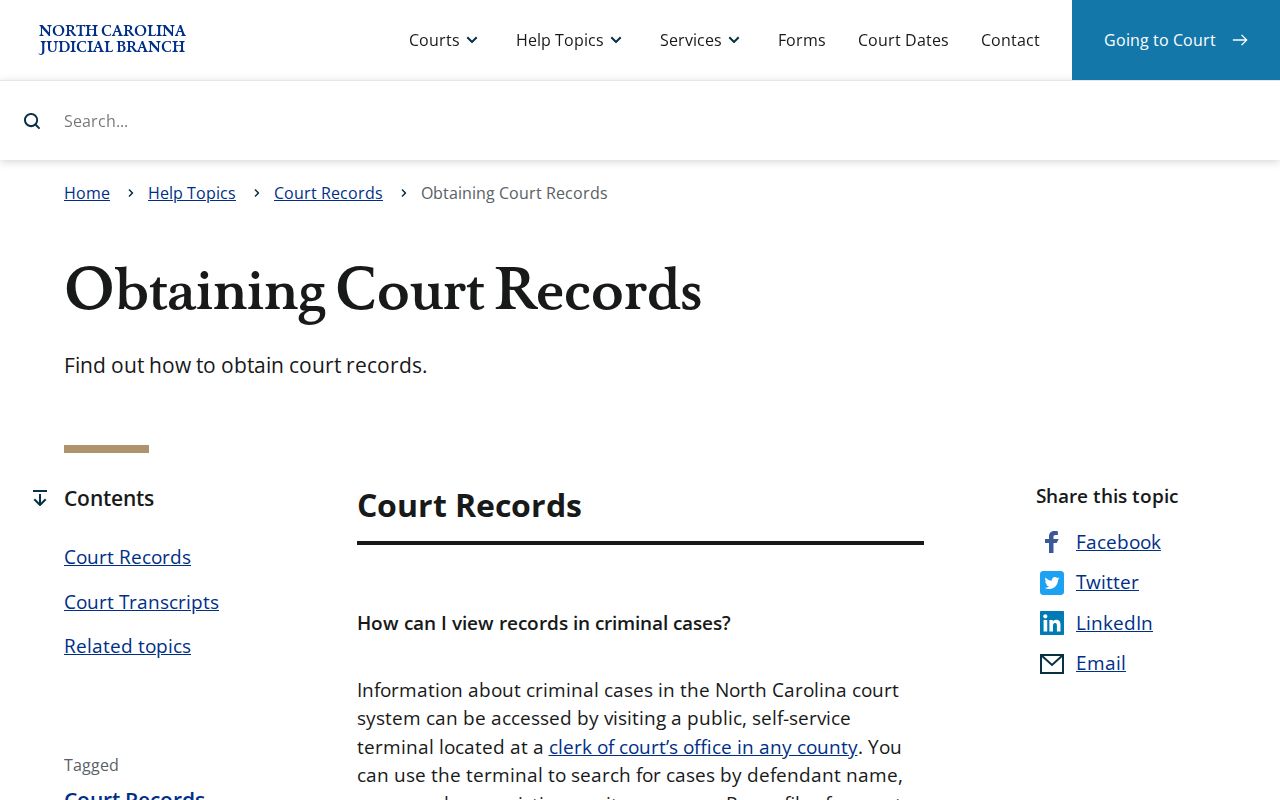
Call ahead when a Warren County court-records search is time-sensitive, since older files, images, and certified copies can take longer to pull.
What a Court Record Contains
A case summary works as an index of events. Warren County's Portal labels the full public timeline a Case Summary / Register of Actions. It is not always the filed document behind each entry. Depending on access limits, it can show case information, assignment information, parties, events, hearings, dispositions, and financial information when applicable. The clerk's own file may hold documents that never display online. Portal case numbers follow the Enterprise Justice pattern, like the state's example. That example is not a Warren case number.
| Case Number | A Portal record number can follow a two-digit year, case-type letters, six-digit sequence, and three-digit county identifier, as in 21CR000003-910. |
|---|---|
| Case Summary | Chronological public case events, case information, assignment information, hearings, and available dispositions. |
| Pleadings and Notices | Filed papers and notices in the court file, when the document is public and available for copying. |
| Orders and Judgments | Written court directions or decisions. A certified copy comes from the Warren County clerk, not from Portal. |
| Documents and Exhibits | Public document images may appear online, while other filed material can be unavailable, restricted, or requested from the clerk. |
Warren County Docket and File
The gap between a docket entry and a filed order is practical, not technical. A Case Summary might show that an order was entered. It might note a hearing occurred. It might say a judgment was recorded. It does not certify the order's content or prove every related document is public. When the fact you need sits in the actual document, ask the Warren County clerk for it. Don't just trust a short event label. That habit also keeps you from reading an online absence as proof that no record exists.
- Case Summary / Register of Actions
- The public case timeline described by Portal for eligible public case types.
- Case event
- A dated entry such as a filing, hearing, order, or disposition in the case history.
- Certified copy
- A copy authenticated by the county clerk for official use, distinct from a plain copy or Portal display.
With a public case number in hand, the steps on the Warren County case search page can identify the file before you make a clerk request.
Certified Copies and Fees
A plain copy just reproduces the material. A certified copy adds the clerk's authentication. An exemplification is a separate, higher-level certification. For dollar amounts, the January 2026 statewide miscellaneous-cost chart lists what is collected on or after January 1, 2026. The clerk should confirm the total for a specific Warren County request, since page counts, multiple certifications, and statutory exceptions can change it. The statewide NCAOC public-record copy rate is not the usual route for a Warren County case-file copy.
| Item | Amount |
|---|---|
| Clerk preparation of the first copy page of each document | $2.00 |
| Each additional page or fraction | $0.25 |
| Certificate under seal | $3.00 |
| Exemplification of records | $10.00 |
| Criminal-record search | $25.00 |
Warren County Clerk of Superior Court
109 S Main St
Warrenton, NC 27589
(252) 257-6300
Weekdays, 8:30 a.m. to 5:00 p.m.
Warren County Audio Record Requests
Audio works differently from a Portal download. The Judicial Branch points requesters to form AOC-G-114. That applies when a clerk or digital recording technician recorded a nonconfidential hearing in Warren County. The form is filed with the clerk in the county where the case was filed. Whether you can get anything depends on whether a recording exists at all. The stated process also charges the actual cost of a CD when one is available. Confidential audio needs its own form plus court permission.
Ask the Warren County clerk about your case before assuming a hearing was recorded. The recording may not even match a transcript. An audio request covers the sound of a hearing only. It is no substitute for a certified order or judgment from the case file.
Note: This concerns a recorded hearing. It does not substitute for ordering a certified order or judgment from the case file.
Public Access and Sealed Records
Public inspection of Warren County court records is broad, but it has limits. Portal shares public information for public case types. The system itself says it is informational rather than official. Some material stays restricted. That includes juvenile records, sealed or expunged matters, unreturned warrants, protective orders, and confidential documents. Even a public case can hold a document that is not open to you.
A blank Portal result can mean several things. The search terms may not match, processing may lag, or the file may be historical. Access may be restricted, or no such case exists. The Warren County clerk can walk you through the request procedure without revealing restricted material.
Key Rules:
G.S. 7A-109 requires public inspection of clerk records during regular office hours unless law prohibits access and permits remote electronic-access arrangements.
G.S. 132-1 treats North Carolina public records as the people's property, subject to confidentiality statutes and court-record rules.
G.S. 132-6.2 allows copies in available media and limits ordinary copy charges unless another law authorizes a different fee.
A qualifying expunction changes access under the governing law and the court order behind it. It is not a Portal filter, and it offers no way to rebuild what was removed.
Warren County NCAOC Request Boundary
The Judicial Branch does have an online public-record request form. Its purpose is narrow, though. NCAOC uses it for agency records that NCAOC itself holds. Its own request-routing guidance sends people after ordinary court documents or local case information to Portal or the clerk. In Warren County, the county clerk holds the actual case-file documents. So the web form fits an NCAOC administrative record. It is the wrong door for a Warren County judgment, pleading, or certified case copy. The official routing notice lays out that boundary.
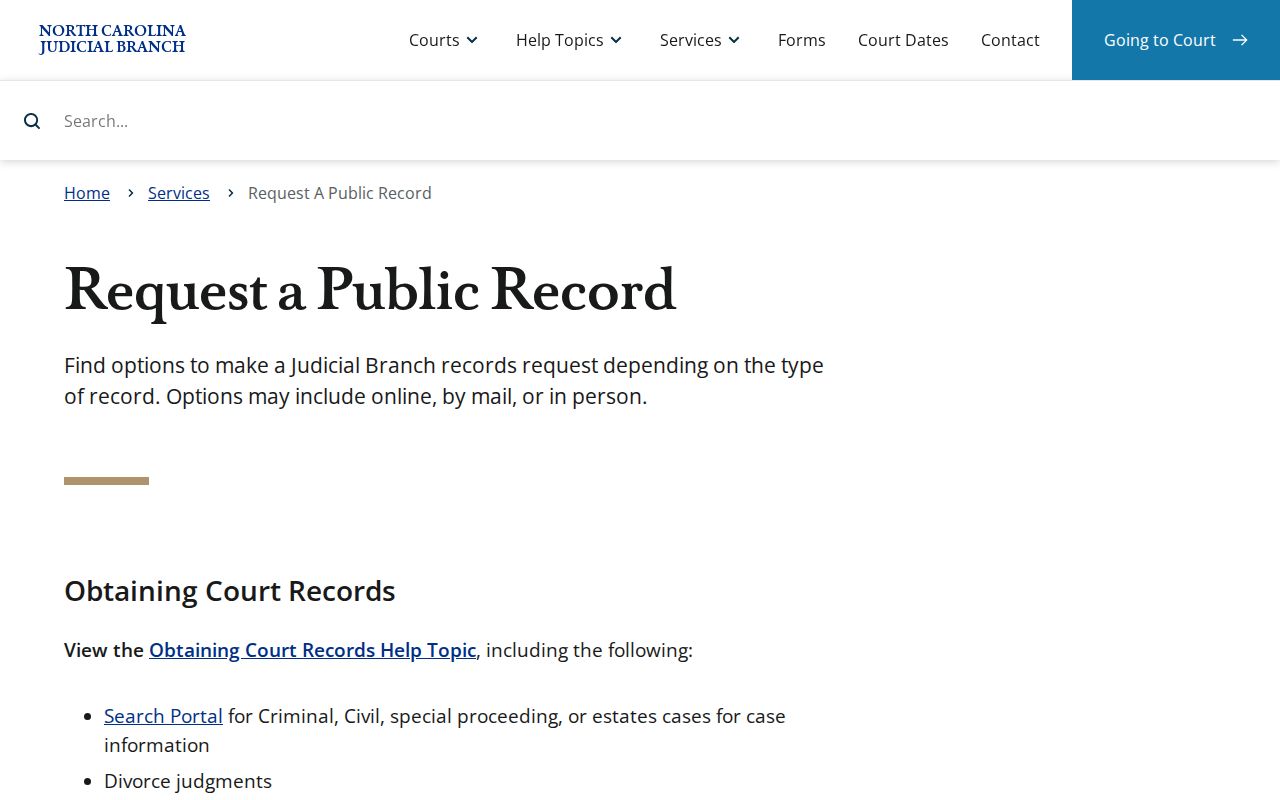
Custodian is the key word. A statewide agency request never moves a Warren County case file away from the clerk who holds it. The NCAOC public-record form shows the state request channel and its requester-information fields.
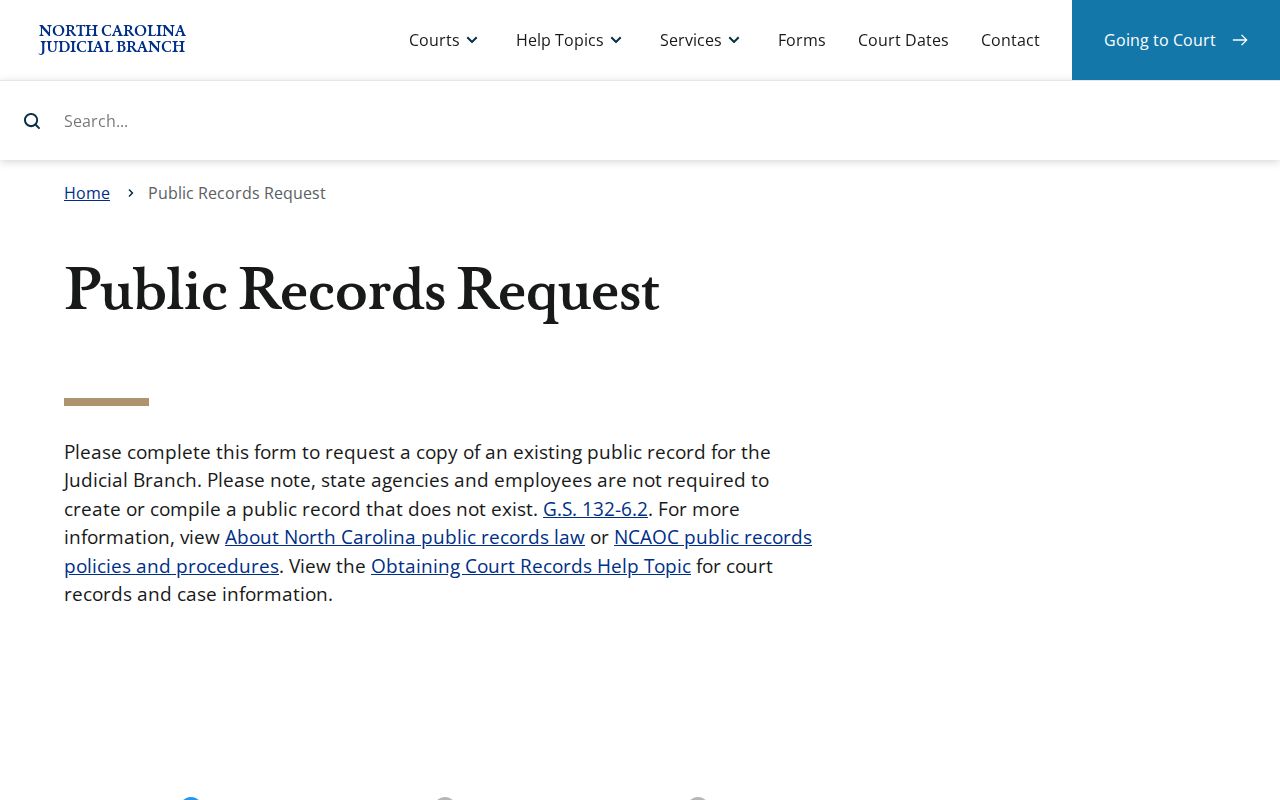
Those fields exist for agency-record requests. A local case-file request should instead name the Warren County case and go straight to the clerk. NCAOC's published policies and procedures detail custodian limits, production practices, and the $0.25 NCAOC copy rate.
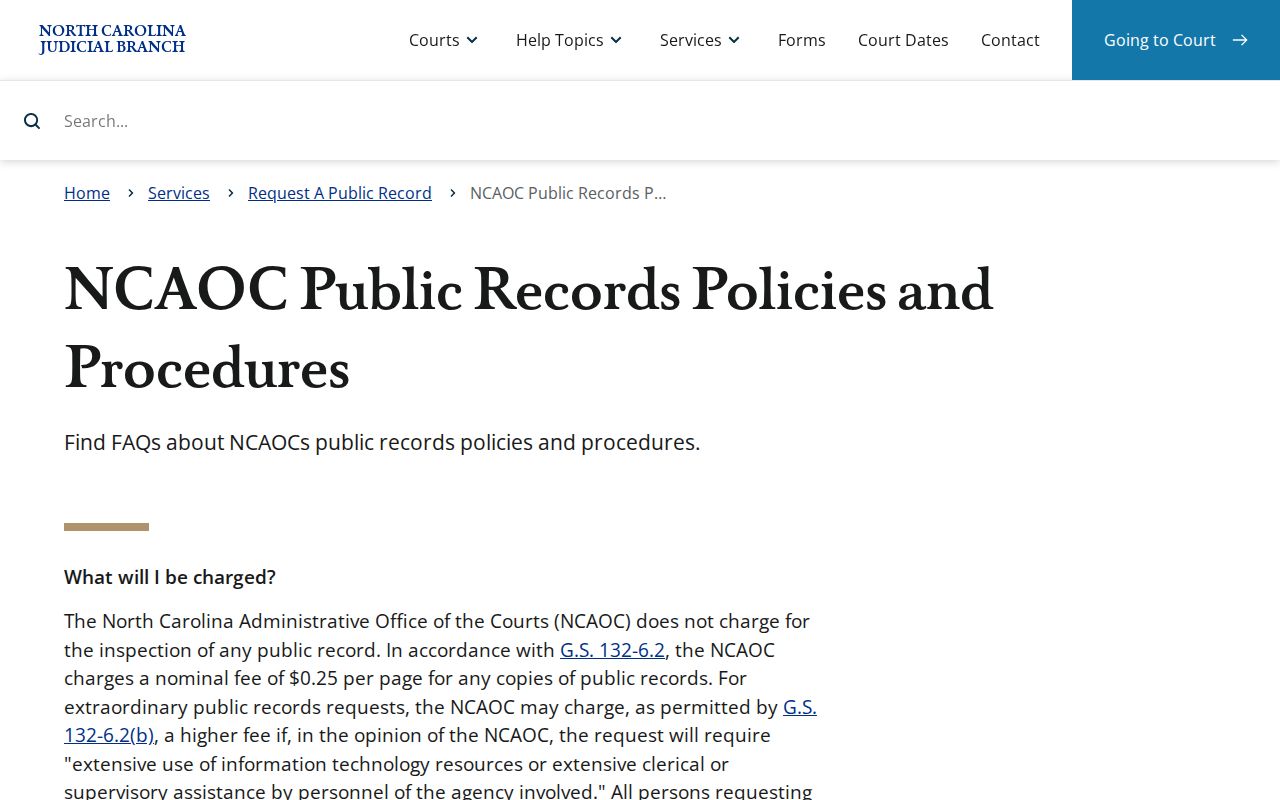
That rate covers NCAOC-held public records only. It does not replace the Warren clerk's current case-file copy and certification fees.